The priority for the two countries is to nurture mutual trust, which will lay a good foundation for resolving disputes.
On October 18, 2017, the 19th National Congress of the Communist Party of China (CPC) opened in Beijing, drawing intense attention from Indian media and think tanks. As Indian news website Livemint noted, India had good reasons to pay close attention to china's political developments because its relations with its largest neighboring country are not very sound. Since the 18th CPC National Congress in 2012, even though China and India experienced a honeymoon period, the two countries have faced disputes and disagreements on many Issues. Consequently, India needs to keep an eye on Chinas domestic affairs and evaluate its foreign policy's influence on India.
EYE ON THE 19TH CPC NATIONAL CONGRESS
When Indian media and think tanks interpreted the congress, they expressed more concern than optimism.
Indian media focused primarily on two aspects: the change in leadership and the message sent from China's diplomatic departments. India paid special attention to the shift in Chinas high level diplomatic personnel and which particular people would be the representatives involved in the China-India border talk mechanism. Also, India mined for new information on China's diplomatic programs like "a common community with a shared future" and "the Belt and Road Initiative."
Indian strategists have maintained a prudent outlook for future China-India relations. Srikanth Kondapalli, an Indian expert on China, believes that after the 19th CPC National Congress, China will maintain its globalization strategies, but also that India should continuously be on alert considering that President Xi Jinping has consistently stressed since the 18th CPC National Congress that no country should assume that we will trade away our core interests, nor will we accept anything that harms our sovereignty, security or development interests."
Arvind Gupta, director of Vivekananda International Foundation believes that because China has maintained such a consistent foreign policy, China-India relations will continue as before.
Such perspectives from Indian media and scholars are as expected. In 2017, China-India relations dropped to their lowest point since the Cold War. The two countries' border troops had a 72-day standoff in China's Donglang area, casting a heavy shadow on the future development of China-India relations. As Chinese Foreign Minister Wang Yi said, the standoff incident ended peacefully through diplomacy, evidencing the growing maturity of bilateral relations. But the two countries need to learn lessons from the incident and avoid reoccurrences.
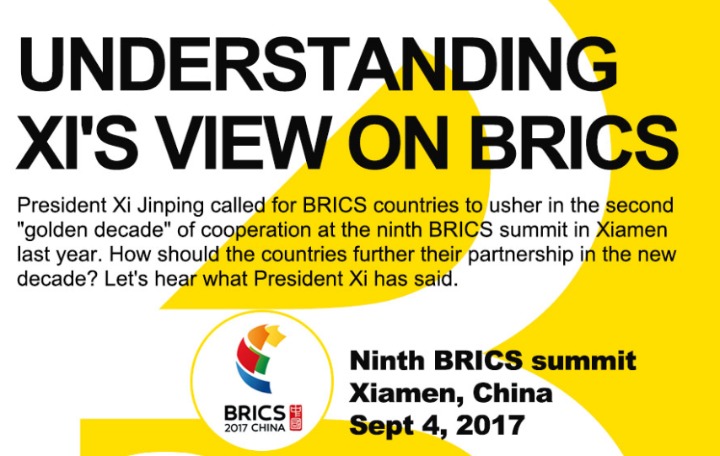
The silver lining of the standoff may be that the two countries now better grasp the importance of their relations. Both counties' leaders and diplomats are working to disperse the negative influence of the standoff incident. On September 5 at the Xiamen BRICS Summit, President Xi and Indian Prime Minister Narendra Modi had a bilateral meeting during which Xi pointed out that they should always remember the basic principle that each country offers development opportunities rather than posing a threat to the other. China hopes India will maintain a proper and reasonable attitude towards China's development. The two countries should demonstrate to the world that peaceful coexistence and cooperation for mutual benefit is the only correct choice for China and India.
On December 11, 2017 when Chinese Foreign Minister Wang Yi attended a China-Russia-India trilateral meeting, he declared that the two sides should put the important visions of the two countries' leaders into practice through concrete measures, reaching a more comprehensive consensus, expanding on positive aspects and accumulating greater positive energy in bilateral relations. The Sushma Swaraj gave an in-depth response to Wang's remarks that concurred on many points.
China-India relations are starting afresh on a road to healthy development. On December 22, 2017, the 20th round of talks between Chinese and Indian special representatives on boundary issues was held in New Delhi, at which Chinese State Councilor Yang Jiechi exchanged views with Indian National Security Adviser Ajit Doval on bilateral ties, border issues and international and regional issues of common concern. Both sides agreed that the common ground shared between the two countries should far outweigh their differences. They said both China and India should better manage and handle differences in accordance with the Five Principles of Peaceful Coexistence while respecting and accommodating each other's concerns. Yang and Doval agreed to strengthen strategic communication and boost strategic mutual trust to promote greater exchange and cooperation in various fields and achieve common development to drive Asian development and contribute to world prosperity. Both sides believe that settling border disputes as soon as possible meets the fundamental interests of both countries.The two parties should strengthen coordination and communication, properly handle relevant border issues and safeguard peace and tranquility in the border areas. Each side also agreed to give full play to the important role of talks between special representatives on boundary issues, maintain contact and negotiations, and boost strategic dialogue and communication with an eye on creating favorable conditions for the future development of China-India relations.
Both the China-Russia-India trilateral meeting and the mechanism of Chinese and Indian special representatives on boundary issues evidence that the two sides look to the future and never forget the past, learning from the Donglang standoff. Just as Xi Jinping said when he met Modi, the two countries need to hold firm to the right strategic direction from a historical perspective, making cooperation the cornerstone of China-India relations. And joint efforts should solve any disagreements between the two countries.
MISUNDERSTANDING OF THE BELT AND ROAD INITIATIVE
Since China proposed the Belt and Road Initiative, India has maintained doubt about it and strongly opposed the construction of the China-Pakistan Economic Corridor (CPEC), which was explicitly expressed by an Indian spokesperson on May 13, 2017, when he was asked about the Belt and Road International Cooperation Forum to be held in Beijing. It was the first time the Indian government formally showed objection to the initiative. The representative claimed that India opposed the China-Pakistan Economic Corridor, a flagship project of the Belt and Road Initiative, because no country should endorse a project that neglects its core concern of sovereignty.
Before that point, China had always encouraged India to join the initiative as a gesture of goodwill. China had openly demonstrated CPEC as an economic project, explicitly declaring that it had no intentions of meddling in the India-Pakistan dispute over the sovereignty of Kashmir. There is no change in China's neutral stance on the issue. By all means, CPEC can be extended to connect the Bangladesh-China-India-Myanmar (BCIM) Economic Corridor to India's North-South Economic Corridor. Additionally, India's Spice Route and the Mausam Initiative can align with the Belt and Road Initiative. But India would still not be convinced.
Furthermore, India boycotted the Belt and Road Initiative in multilateral mechanisms by attempting to offset its influence. For instance, Japan and India began to jointly build the Asia-Africa Growth Corridor. India accelerated its connectivity with neighboring countries by constructing Iran's Chabahar Port and India-Myanmar-Thailand highway. While ejecting CPEC, however, India also showed some flexibility: The joint study group meeting of the BCIM Economic Corridor resumed in Calcutta after a two-and-half-year drought from April 25 to 26, 2017.
A December China-Russia-India trilateral meeting reached a consensus to promote the connectivity of Eurasia. At a press conference, foreign ministers of the three countries agreed to strive for policy coordination, facility connectivity, unimpeded trade, financial integration and people-to-people exchange. Their individual connectivity initiatives should complement rather than collide with each other, helping to create and promote regional integration. Such ideas can help ease Indias wariness of the Belt and Road Initiative.
China welcomes India's connectivity with neighboring countries, encouraging it to play a larger role in regional development. "China is the biggest neighbor of South Asia, and India is the largest country in South Asia," said President Xi Jinping during a September 2014 visit to India. "China is ready to work together with India to make greater contributions to the development of the region so that the 3 billion people living on both sides of the Himalayas will enjoy peace, friendship, stability and prosperity." Furthermore, China expected India's connectivity project to become healthy competition. Rather than making the region a wrestling ring, major countries should complement each other and work towards joint progress.
INDO-PACIFIC STRATEGY
In June 2017, Modi and United States President Donald Trump met for the first time, realizing the smooth transition of the US-India strategic partnership. On December 18, the White House issued its first National Security Strategy report of the Trump administration which illustrated the US "Indo-Pacific Strategy" and placed India at the core of the strategy.
Actually, India and the US have been continuously strengthening their strategic and defense cooperation. In addition to enhancing India's independent defense capabilities, the US enjoys intelligence sharing with India and has gradually dispersed legal roadblocks to exporting arms which are only available to its allies such as P-8I maritime reconnaissance aircraft, drones and aircraft carriers.
At the same time, the two countries have adjusted their policies to accommodate the Indo-Pacific Strategy. India's Act East Policy deeply aligns with the Indo-Pacific strategies of the US and Japan, seeking an alliance between India, Japan and Australia as the pivot. The four countries are striving for a four-way leaders' dialogue mechanism and a dialogue mechanism on maritime security as well. Organs within the four countries also set up in-depth dialogue mechanisms such as 2+2 Foreign Secretaries and Defense Secretaries Dialogues between India and Australia as well as between the US and India.
China does not oppose India setting up normal relations with any major country, but India's Act East Policy concerns China's interests of security. Certainly, China needs to evaluate the development of US-India relations as they consider China the "simulated enemy". After Modi met Trump, they issued a joint statement in which they reiterated the importance of respecting freedom of navigation, safe air space and commerce throughout the region, calling on all nations to resolve territorial and maritime disputes peacefully and in accordance with international law.
The statement expressed support for bolstering regional economic connectivity through the transparent development of infrastructure and the use of responsible debt financing practices, while ensuring respect for sovereignty and territorial integrity, rule of law, and the environment.
It called on other nations in the region to adhere to these principles. Some of the contents clearly target China.
Certainly, China needs to see that India hopes to maintain a subtle balance with the US' Indo-Pacific Strategy. India expects the US to play a more important role in maintaining the regional "balance of power" because at present only the US can exert effective containment of China. Also, India closely monitors any cooperation or conflict between China and the US. India showed concern over the so-called G2 — China and the US — popular during the Obama Administration, which resulted in India's strategic stance against the US to some extent.
China can catch a glimpse of India's future policy on the Indo-Pacific Strategy through its attitude towards the US Rebalance Toward the Asia Pacific Region strategy. In 2012 when former US Defense Secretary Leon Panetta visited the Institute for Defense Studies and Analyses (IDSA), he said that the new US strategy sought to "expand military partnerships and presence in the arc extending from the Western Pacific and East Asia into the Indian Ocean region and South Asia. Defense cooperation with India is a lynchpin to this strategy." The remark aroused heated discussion in India about how to respond to the Rebalance Toward Asia-Pacific Region strategy. At that time, the Manmohan Singh administration openly declared that India adhered to an independent foreign policy and would not be used as a tool to contain China. Also, India intentionally avoided giving the impression of joining hands with the US and Japan. In April 2013, India retreated from the US-Japan multilateral maneuver to prevent regional countries from thinking it was forming an alliance with the US and Japan.
India still lacks concrete policy to accommodate the US' Indo-Pacific Strategy. But after talks among the senior officials from the US, Japan, Australia and India held in November 2017, India issued a statement that was starkly different from those of the other three countries. The statement did not mention "rule-based order", "freedom of navigation", "maritime security" or "international law", and did not promise to further the quadrilateral dialogue mechanism. The statement declared that India strives for a free and open, prosperous and inclusive Indo-Pacific, which was far from the appeal for "cooperation based on shared values" pursued by the US, Japan and Australia. With so many uncertainties surrounding the US strategy, India is unlikely to leap into the US' arms any time soon.
After the Donglang standoff, in a nutshell China-India relations need more "positive energy". As two ancient civilizations and emerging market economies, China and India share common histories and national conditions, which make them have identical or similar attitudes toward world affairs and trends. So the two countries should be natural partners if they can just find greater common ground. The Indian movie Dangal was tremendously popular in China, evidencing the many common features between the two countries' cultures.
The priority for both countries should be to nurture mutual trust, which will lay a good foundation for resolving disputes. If the countries lack trust, problems will continually plague and erode bilateral relations. Also China-India relations need "a new start" and to "remain true to original aspirations".
As former Chinese leader Deng Xiaoping said, only when China and India become fully developed can the real "Asian century" arrive. And as the first Indian Prime Minister Jawaharlal Nehru said, only when India and China work hand-in-hand can the two countries shoulder the historical responsibility and mission of the times to maintain Asia's peace, stability, prosperity and renewal. And Xi Jinping said, "If China and India speak with one voice, the world will listen."
The author is a research fellow at the Institute of International Studies at Fudan University.
MISUNDERSTANDING OF THE BELT AND ROAD INITIATIVE
Since China proposed the Belt and Road Initiative, India has maintained doubt about it and strongly opposed the construction of the China-Pakistan Economic Corridor (CPEC), which was explicitly expressed by an Indian spokesperson on May 13, 2017, when he was asked about the Belt and Road International Cooperation Forum to be held in Beijing. It was the first time the Indian government formally showed objection to the initiative. The representative claimed that India opposed the China-Pakistan Economic Corridor, a flagship project of the Belt and Road Initiative, because no country should endorse a project that neglects its core concern of sovereignty.
Before that point, China had always encouraged India to join the initiative as a gesture of goodwill. China had openly demonstrated CPEC as an economic project, explicitly declaring that it had no intentions of meddling in the India-Pakistan dispute over the sovereignty of Kashmir. There is no change in China's neutral stance on the issue. By all means, CPEC can be extended to connect the Bangladesh-China-India-Myanmar (BCIM) Economic Corridor to India's North-South Economic Corridor. Additionally, India's Spice Route and the Mausam Initiative can align with the Belt and Road Initiative. But India would still not be convinced.
Furthermore, India boycotted the Belt and Road Initiative in multilateral mechanisms by attempting to offset its influence. For instance, Japan and India began to jointly build the Asia-Africa Growth Corridor. India accelerated its connectivity with neighboring countries by constructing Iran's Chabahar Port and India-Myanmar-Thailand highway. While ejecting CPEC, however, India also showed some flexibility: The joint study group meeting of the BCIM Economic Corridor resumed in Calcutta after a two-and-half-year drought from April 25 to 26, 2017.
A December China-Russia-India trilateral meeting reached a consensus to promote the connectivity of Eurasia. At a press conference, foreign ministers of the three countries agreed to strive for policy coordination, facility connectivity, unimpeded trade, financial integration and people-to-people exchange. Their individual connectivity initiatives should complement rather than collide with each other, helping to create and promote regional integration. Such ideas can help ease Indias wariness of the Belt and Road Initiative.
China welcomes India's connectivity with neighboring countries, encouraging it to play a larger role in regional development. "China is the biggest neighbor of South Asia, and India is the largest country in South Asia," said President Xi Jinping during a September 2014 visit to India. "China is ready to work together with India to make greater contributions to the development of the region so that the 3 billion people living on both sides of the Himalayas will enjoy peace, friendship, stability and prosperity." Furthermore, China expected India's connectivity project to become healthy competition. Rather than making the region a wrestling ring, major countries should complement each other and work towards joint progress.