By Christopher Bovis |
China Watch |
Updated: 2018-06-14 15:32
Christopher Bovis
For decades, the tide of globalization has promoted economic integration and uninhibited market access with low tariff barriers. But the United States’ recent protectionist measures, especially the imposition of $150 billion on Chinese exports to the US, have demonstrated a departure from the principle of free trade.
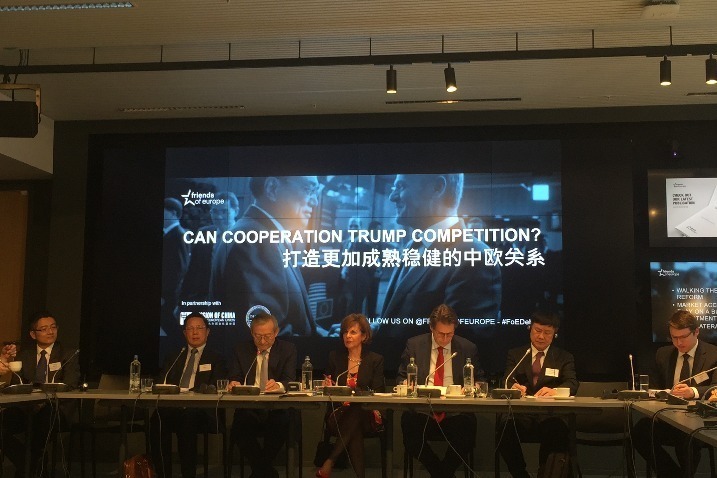
Within this context, China and the European Union are two systems that face opportunities to further collaborate and purport the regulation of international trade based on the market access principle.
China under the auspices of the World Trade Organization has emerged as one of the most prolific markets in the world. The EU system represents one of the most mature, accessible and interoperable systems of liberalizing trade. Under both systems, international trade regulation has been preoccupied with the demolition of tariff and nontariff protection. This has led to a significant reduction in tariffs, on the premise that world trade cannot function without tariffs. Tariffs in trade represent a means of revenue for the state, and ultimately a means of protecting domestic markets and industries.
Protectionism and nationalistic trade policies are the result of loss of competitive advantages. The reaction of political leaders is to resort to protection and preferential trade systems that support national industries and employment policies. However, this runs counter to a global integration agenda that has been sought by international institutions and governments across the world with the objective of trade liberalization and the elimination of protections and preferences by governments to national industries. As an instrument of international trade, protectionism must be avoided because it is a shortsighted reaction that has adverse effects in the long-run. It leads to trade friction and economic wars that unnecessarily hinder growth and global economic progress.
A credible solution to the stalemate of economic progress and the threat of the ensuing trade wars is the application of a responsive and responsible political and economic leadership that must insist on the need to promote sustainable development. Pivotal to this solution is a global regulatory system, which could strike a meaningful and workable balance between free trade and national concerns. The focus of sustainable development should be the assessment of the traditional trade systems raised by developing countries for preferential treatment and the current concerns that such economies in the global trading environment may be vulnerable to marginalization and the problem of managing discrimination.
China and the EU should lead the review and reassessment of the role of institutional actors such as the United Nations, the World Bank and the International Monetary Fund in promoting economic development in developing countries. Current issues of international trade and sustainable development must be examined, including an appreciation for the differentiated treatment of developing countries, technology transfer issues and development, debt and finance within development, and institutional convergence of development issues in international trade.
A responsible global political and economic leadership requires a balance of facilitating free trade while protecting national interests, although such a balance is difficult to strike, because its inherent features run against the grain of international normative and political dogma over the past century.
A responsive and responsible political and economic leadership will have a number of features that focus on diluting globalization without destroying free trade. Although the fundamental principle of free trade is paramount to the world’s political and economic systems, priorities of national or even regional systems will attempt to balance the positive effects of free trade with any adverse effects arising out of uninhibited market access to trade.
Free trade is only one dimension of globalization. Free trade allocates resources where there are most benefits for the owners of production factors. On the other hand, free trade opens numerous possibilities for economic growth based on diversification, mobility (which represents the ability to mobilize production factors in different markets) and policy intervention. The latter epitomizes the need to instigate contemporary industrial policies. This approach aims to create framework conditions under which improvement of national or regional competitiveness would compensate where necessary for market failure. Free trade and the results of globalization generate positive externalities on the economy as a whole, increasing the growth potential and the vibrancy of the economic fabric, fostering innovation and training as a result of increased demand for skills. In this perspective, industrial policy plays a key role by concentrating on strategies, the creation of a favorable environment and clear support for key investments that can generate growth.
A responsive and responsible political and economic leadership will bear the hallmarks of contemporary and fit-for-purpose industrial policies across the world that harness the benefits of free trade while balancing the negatives of the ensuing industrial reorganization. Such industrial policies should be interoperable and focus on the following tasks.
The first is to set out the boundaries within which industry and enterprises can flourish. Failure to set this framework correctly can lead to risks for the public, or to the waste of industrial resources and the frustration of entrepreneurial initiative. The second is to ensure that conditions are present for industry to develop and realize its competitive potential. The availability of technology, skills, an educated workforce, a positive attitude to risk-takers, finance and the other conditions that form a truly competitive and innovative business environment have to be the active concern of a responsive and responsible global leadership. The third is to ensure that the frameworks, institutions and instruments that are necessary for the business environment and for industry are able and capable to accommodate contemporary societal needs and requirements.
Globalization and free trade partially serve national interest. They enhance the global economic performance but leave behind a socioeconomic vacuum in need of redress. China and the EU should embrace the role of responsible and responsive global leaders in response to the adversities of globalization and should prevent protectionism. Instead, a model of responsive and responsible leadership must embrace the positive dynamics of industrial policies and offer the solutions to the challenge of the new world order.
Christopher Bovis is a professor of international business law at the University of Hull. The views do not necessarily reflect those of China Watch.
All rights reserved. Copying or sharing of any content for other than personal use is prohibited without prior written permission.
China and the EU should lead the review and reassessment of the role of institutional actors such as the United Nations, the World Bank and the International Monetary Fund in promoting economic development in developing countries. Current issues of international trade and sustainable development must be examined, including an appreciation for the differentiated treatment of developing countries, technology transfer issues and development, debt and finance within development, and institutional convergence of development issues in international trade.
A responsible global political and economic leadership requires a balance of facilitating free trade while protecting national interests, although such a balance is difficult to strike, because its inherent features run against the grain of international normative and political dogma over the past century.
A responsive and responsible political and economic leadership will have a number of features that focus on diluting globalization without destroying free trade. Although the fundamental principle of free trade is paramount to the world’s political and economic systems, priorities of national or even regional systems will attempt to balance the positive effects of free trade with any adverse effects arising out of uninhibited market access to trade.
Free trade is only one dimension of globalization. Free trade allocates resources where there are most benefits for the owners of production factors. On the other hand, free trade opens numerous possibilities for economic growth based on diversification, mobility (which represents the ability to mobilize production factors in different markets) and policy intervention. The latter epitomizes the need to instigate contemporary industrial policies. This approach aims to create framework conditions under which improvement of national or regional competitiveness would compensate where necessary for market failure. Free trade and the results of globalization generate positive externalities on the economy as a whole, increasing the growth potential and the vibrancy of the economic fabric, fostering innovation and training as a result of increased demand for skills. In this perspective, industrial policy plays a key role by concentrating on strategies, the creation of a favorable environment and clear support for key investments that can generate growth.
A responsive and responsible political and economic leadership will bear the hallmarks of contemporary and fit-for-purpose industrial policies across the world that harness the benefits of free trade while balancing the negatives of the ensuing industrial reorganization. Such industrial policies should be interoperable and focus on the following tasks.
The first is to set out the boundaries within which industry and enterprises can flourish. Failure to set this framework correctly can lead to risks for the public, or to the waste of industrial resources and the frustration of entrepreneurial initiative. The second is to ensure that conditions are present for industry to develop and realize its competitive potential. The availability of technology, skills, an educated workforce, a positive attitude to risk-takers, finance and the other conditions that form a truly competitive and innovative business environment have to be the active concern of a responsive and responsible global leadership. The third is to ensure that the frameworks, institutions and instruments that are necessary for the business environment and for industry are able and capable to accommodate contemporary societal needs and requirements.
Globalization and free trade partially serve national interest. They enhance the global economic performance but leave behind a socioeconomic vacuum in need of redress. China and the EU should embrace the role of responsible and responsive global leaders in response to the adversities of globalization and should prevent protectionism. Instead, a model of responsive and responsible leadership must embrace the positive dynamics of industrial policies and offer the solutions to the challenge of the new world order.
Christopher Bovis is a professor of international business law at the University of Hull. The views do not necessarily reflect those of China Watch.
All rights reserved. Copying or sharing of any content for other than personal use is prohibited without prior written permission.