By KARL WILSON |
China Daily Asia |
Updated: 2018-06-25 16:41
Australia’s Prime Minister Malcolm Turnbull used a meeting of the Australia China Business Council (ACBC) on June 19 to try and repair strained relations between Canberra and Beijingwhich he largely blamed on the media.
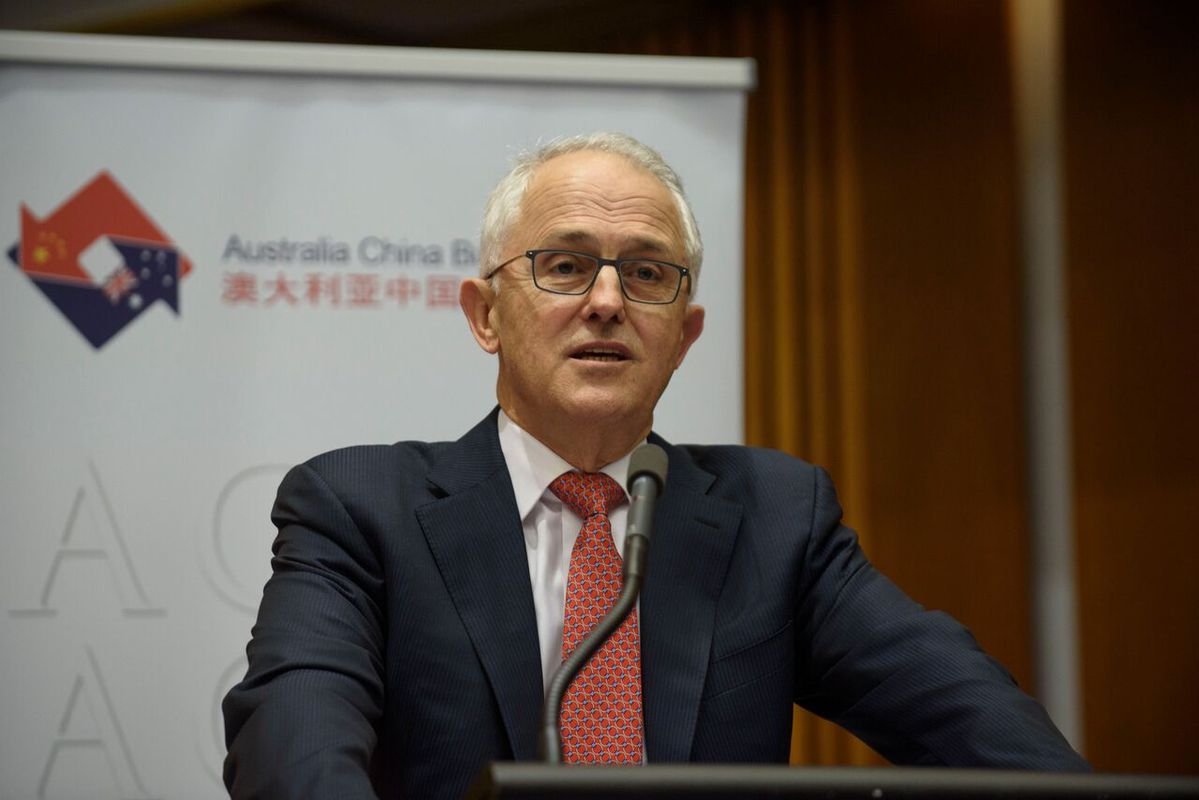
Prime Minister Malcolm Turnbull speaks at the Australia China Business Council.
He told the gathering of businessmen and women that he was “filled with optimism” about the Australia-China relationship.
“We should all be positive about it and recognize the strength of the engagement and also note that sometimes in the media there is always going to be an emphasis on differences, on conflict, on problems,” he said.
Various issues which have annoyed Beijing over the last two years have included unfounded claims of the country trying to buy political influence and of some Chinese students being recruited as spies at Australian universities.
Turnbull told his audience at the business forum in Canberra that from “time to time, there will be differences in terms of issues, particular issues, but the important thing is we deal with them as friends with respect”.
“Mutual respect is the absolute key. And that’s what we undertake, and I know that’s what characterizes our relationship.”
He said: “Sometimes you’ll get issues at a fairly granular level. You know recently there were reports of containers of wine being held up on the docks. Well, we went to work to ensure that that could be resolved and indeed, so it was.”
Turnbull said it is important to keep building the relationship.
“Yes, we have different political systems,but as long as we respect each other, recognize that we have so much in common to share, and above all recognize that we have a great economic relationship,”he said.
China’s ambassador to Australia, Cheng Jingye, told the ACBC that in order to dispel “the clouds and achieve sustained and sound development” in bilateral relations, the two countries need to have more “interactions and inclusiveness, with less bias and bigotry”.
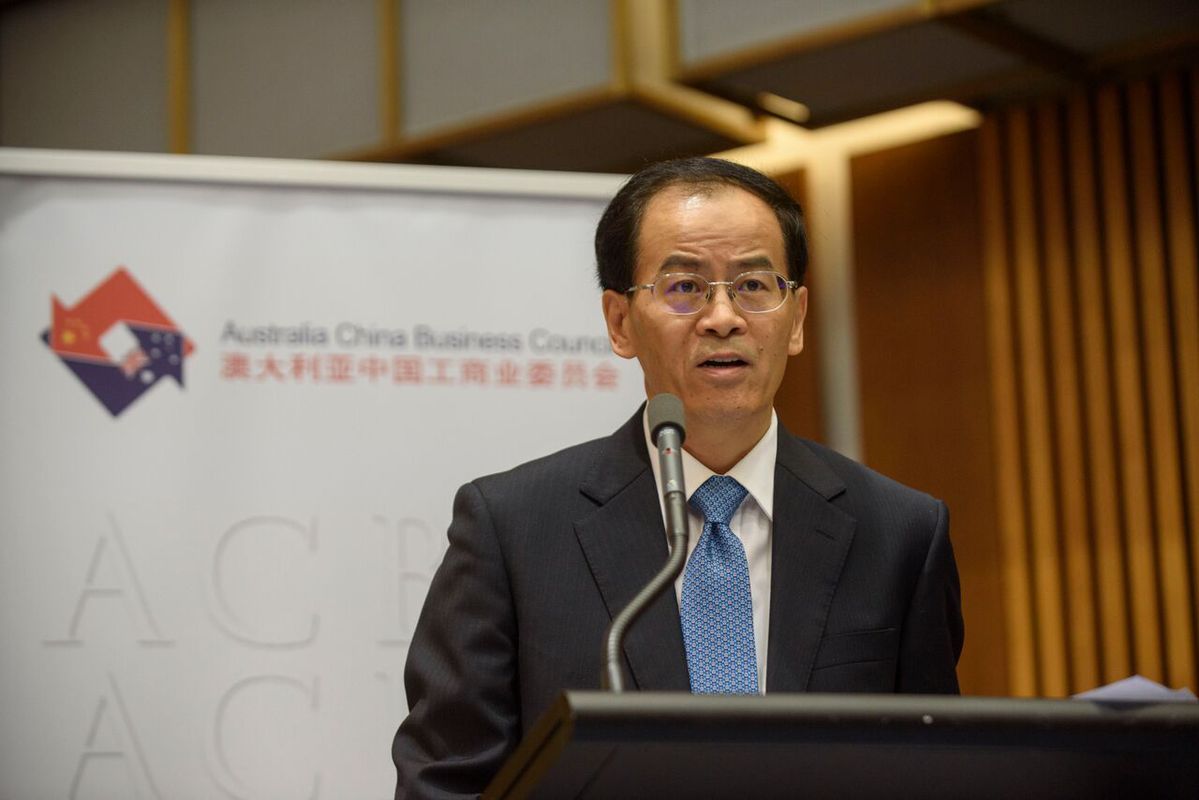
Chinese Ambassador to Australia Cheng Jingye calls for more interactions and inclusiveness in his speech.
“We need to see each other’s development and policy intentions from a more positive perspective, with less cold war mentality,” Cheng said.
“We need to build more mutual trust, with less misunderstanding. We need to develop more connections between our two countries and two peoples, with less barriers. And we need to respect each other’s core interests and major concerns, while managing the differences in a constructive manner,” he said.
Australia’s Foreign Minister Julie Bishop and Trade Minister Steven Ciobo used the meeting to dispel fears among business leaders that relations were strained.
Ciobo told the gathering he was “fully optimistic” about the Australia-China relationship while Bishop, one of the more outspoken critics of Beijing, said Australia has disagreements with China over some issues but added that Australia also has disagreements with its ally the United States.
Professor Zhu Ying, director of the Australian Centre for Asian Business at the University of South Australia, said the prime minister and his ministers will “have to do better than that” if they are to convince the business community that “all is well” with the relationship.
Having just returned to Australia after leading a delegation of South Australian business leaders to six cities in China, Zhu told China Daily Asia Weekly that the first question “we were asked is why Australia has become so unfriendly toward China”.
He added: “We were asked this everywhere we went. China has always viewed Australia as a friendly country but it has noticed a change.”
Zhu admitted that the problem was in the politics rather than the people-to-people relationship.
“Businesses in China still want to do business with us, as indeed Australian businesses want to do business with China,” he said.
Professor James Laurenceson, deputy director of the Australia-China Relations Institute at the University of Technology Sydney, said: “For all the allegations about the Chinese government seeking to skew Australia’s democratic processes, there’s precious little evidence it has been successful.”
He said it was time for Australia’s national interests to be asserted with the mix of pragmatism and diplomatic language shown by former Labor prime minister Gough Whitlam in his engagement with China. Whitlam formally recognized China in 1972.
Ambassador Cheng reminded the audience that with 40 years of reform and opening-up, China has made tremendous progress on its journey to modernization, but added: “We still have a long way to go.”
He said the 19th National Congress of the Communist Party of China (CPC), held last October, drew a blueprint for China’s development.
“It’s a three-step strategy. By 2020, we will accomplish the task of building a moderately prosperous society in all respects. By 2035, we will basically realize socialist modernization and, by the middle of this century, we will turn China into a great modern socialist country,” Cheng said.
“Based on past experience and in light of future challenges, for China to realize those goals, we must adhere to the leadership (of the CPC). We must stay on our own development path, guided by Xi Jinping Thought on Socialism with Chinese Characteristics for a New Era. And we must keep reforming and opening-up.”
He told his audience that China will continue to advance reform across the board, which includes deepening the supply-side structural reform.
“We will follow the new development vision, pay more attention to the quality of development rather than the speed of economic growth,” Cheng said.
“Meanwhile, we will fight three major battles. The first is to forestall and defuse major risks, especially to forestall systemic financial risks. The second is to carry out targeted poverty alleviation, with over 10 million of poor rural population to be reduced this year. And the third is to make further progress in addressing pollution and building a ‘Beautiful China’.
“China in the future will make new ground in opening up on all fronts,” he added.
At this year’s Boao Forum for Asia annual conference, held in April in South China’s Hainan province, President Xi Jinping emphasized that China’s doors will open even wider.
Cheng said China will significantly broaden market access, further opening up the services sector, especially financial services.
“We will create a more attractive investment environment. We will strengthen protection of intellectual property rights. And we will take the initiative to expand imports.”
He said China will join efforts with other countries and international organizations to take the Belt and Road Initiative forward.
“The (Belt and Road) is China’s idea, but its opportunities and outcomes are going to benefit the world,” he said.
The plan is open, transparent and inclusive, Cheng said. “China has no geopolitical calculations, does not seek exclusionary blocs and will not impose business deals on others. Since it was put forward five years ago, the initiative has been supported and participated in by a growing number of countries and international organizations.
“As long as all parties stick to the principles of extensive consultation, joint contribution and shared benefits, the (Belt and Road) can be surely made into the broadest platform for international cooperation to the greater benefit of all our peoples.”
Cheng went on to say that no matter how much progress the country makes in its development, “China will not threaten anyone, attempt to overturn the existing international system, or seek any spheres of influence”.
“China will stay as determined as ever to promote world peace, contribute to global prosperity and uphold the international order,” he said.
Since 1972, when Australia established diplomatic ties with China, there has been a great deal of progress in cooperation between the two countries.
“These progresses have not only robustly spurred the economic growth of both countries, but also delivered real benefits to the two peoples. Of course, the development of our bilateral relations has not been always smooth. Sometimes there (will be) clouds, even wind and rain,” Cheng said.
“China and Australia are in the same region. Both our economies are highly complementary. We have many shared interests.
“The potential for further cooperation is huge, including the trade in services. And we both stand for free trade and an open economy. There is no reason for us not to develop a better relationship with each other based on mutual benefits and mutual trust.”
This article was first published by China Daily Asia Weekly.
Professor James Laurenceson, deputy director of the Australia-China Relations Institute at the University of Technology Sydney, said: “For all the allegations about the Chinese government seeking to skew Australia’s democratic processes, there’s precious little evidence it has been successful.”
He said it was time for Australia’s national interests to be asserted with the mix of pragmatism and diplomatic language shown by former Labor prime minister Gough Whitlam in his engagement with China. Whitlam formally recognized China in 1972.
Ambassador Cheng reminded the audience that with 40 years of reform and opening-up, China has made tremendous progress on its journey to modernization, but added: “We still have a long way to go.”
He said the 19th National Congress of the Communist Party of China (CPC), held last October, drew a blueprint for China’s development.
“It’s a three-step strategy. By 2020, we will accomplish the task of building a moderately prosperous society in all respects. By 2035, we will basically realize socialist modernization and, by the middle of this century, we will turn China into a great modern socialist country,” Cheng said.
“Based on past experience and in light of future challenges, for China to realize those goals, we must adhere to the leadership (of the CPC). We must stay on our own development path, guided by Xi Jinping Thought on Socialism with Chinese Characteristics for a New Era. And we must keep reforming and opening-up.”
He told his audience that China will continue to advance reform across the board, which includes deepening the supply-side structural reform.
“We will follow the new development vision, pay more attention to the quality of development rather than the speed of economic growth,” Cheng said.
“Meanwhile, we will fight three major battles. The first is to forestall and defuse major risks, especially to forestall systemic financial risks. The second is to carry out targeted poverty alleviation, with over 10 million of poor rural population to be reduced this year. And the third is to make further progress in addressing pollution and building a ‘Beautiful China’.
“China in the future will make new ground in opening up on all fronts,” he added.
At this year’s Boao Forum for Asia annual conference, held in April in South China’s Hainan province, President Xi Jinping emphasized that China’s doors will open even wider.
Cheng said China will significantly broaden market access, further opening up the services sector, especially financial services.
“We will create a more attractive investment environment. We will strengthen protection of intellectual property rights. And we will take the initiative to expand imports.”
He said China will join efforts with other countries and international organizations to take the Belt and Road Initiative forward.
“The (Belt and Road) is China’s idea, but its opportunities and outcomes are going to benefit the world,” he said.
The plan is open, transparent and inclusive, Cheng said. “China has no geopolitical calculations, does not seek exclusionary blocs and will not impose business deals on others. Since it was put forward five years ago, the initiative has been supported and participated in by a growing number of countries and international organizations.
“As long as all parties stick to the principles of extensive consultation, joint contribution and shared benefits, the (Belt and Road) can be surely made into the broadest platform for international cooperation to the greater benefit of all our peoples.”
Cheng went on to say that no matter how much progress the country makes in its development, “China will not threaten anyone, attempt to overturn the existing international system, or seek any spheres of influence”.
“China will stay as determined as ever to promote world peace, contribute to global prosperity and uphold the international order,” he said.
Since 1972, when Australia established diplomatic ties with China, there has been a great deal of progress in cooperation between the two countries.
“These progresses have not only robustly spurred the economic growth of both countries, but also delivered real benefits to the two peoples. Of course, the development of our bilateral relations has not been always smooth. Sometimes there (will be) clouds, even wind and rain,” Cheng said.
“China and Australia are in the same region. Both our economies are highly complementary. We have many shared interests.
“The potential for further cooperation is huge, including the trade in services. And we both stand for free trade and an open economy. There is no reason for us not to develop a better relationship with each other based on mutual benefits and mutual trust.”
This article was first published by China Daily Asia Weekly.