Fighting climate change through a common China-EU carbon pricing initiative
By Edmond Alphandéry |
Updated: 2018-11-20 15:22
Editor's note: This article is part of the Policy Preview Report for G20 Summit in Argentina.
Edmond Alphandéry
The speed of globalization is fostering the community of destiny of all the people around the world. We can see it in the major challenge to mankind which is climate change. On this issue Europeans and Chinese have a lot in common.
Despite the numerous initiatives to reduce carbon emissions across the globe, the world desperately remains on a global warming trajectory of more than 3 C compared to pre-industrial era, far above the COP21 target. Without a powerful device to accelerate reduction of carbon emissions, global warming will continue blowing disastrous consequences, starting by multiplication of extreme weather events, ending up in mass migrations and hence geopolitical instability, jeopardizing life on our planet.
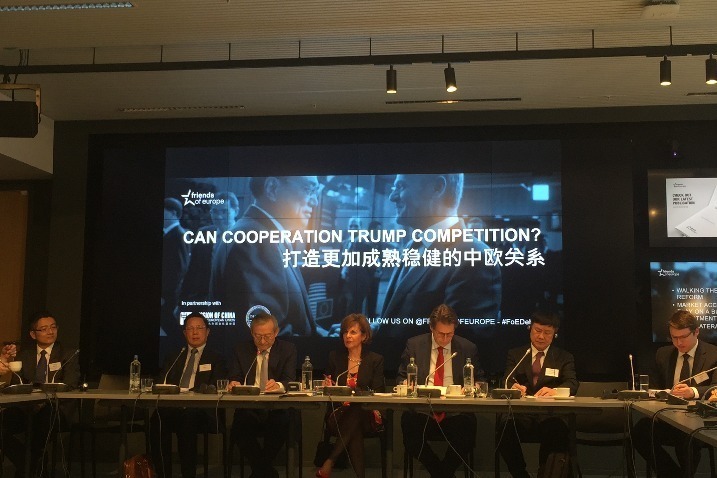
On July 16 in Beijing, at the 20th EU-China Summit, the two sides which celebrated the 15th anniversary of the EU-China Comprehensive Strategic Partnership, “acknowledged the urgency of addressing climate change and the importance of giving full effect to the Paris Agreement”.
It has to be acknowledged that China, by launching what has become the world’s largest carbon emissions trading market last Dec 19, is showing its ambitious goals to contribute to the fight against CO2 emissions. Since the launch of pilot carbon markets in China in 2011 the price of carbon has remained low: less than 30 yuan per ton ($4.3). But according to the deputy head of the NDRC’s climate change department, the price of carbon needs to rise in China to 200-300 yuan. A level that, when he made this declaration in December of last year, he hoped China to attain by 2020.
In the EU, European authorities agreed at the end of last year on an agenda to reach carbon emissions reduction target of 40 percent under 1990 levels. Since 2008 when the price of carbon was hovering over 240 yuan per ton ($34.4), it has varied from 28 yuan ($4) in 2013 to below 64 yuan ($9.2) at the end of 2017. Since the beginning of this year, due to the recent decisions implemented, it has been steadily rising and is presently hovering around 200 yuan per ton. But we cannot be sure that the level presently attained will be sustained. We cannot exclude, as we saw in the past, a disequilibrium in the Emissions Trading Scheme (ETS) market leading to its downturn.
Up to now the EU has favored control of the quantities of carbon emissions over its price. It is unfortunate that the EU gets deprived of the most powerful device which is the signal given to all those who emit carbon of the price they have to pay.
We know now that this price mechanism is efficient. For instance, a CO2 price was introduced in the United Kingdom 2011 budget and put into force in 2013. CO2 emissions were reduced by 15 percent from 2012 to 2015. During the same period, CO2 emissions fell by 5 percent only in the rest of the EU.
All around the world, putting a significant price on carbon is gathering momentum. Many initiatives in this direction have been undertaken in Canada, the US, Nordic countries and elsewhere. The World Bank has even put in place a “Carbon Pricing Leadership Coalition” in order to rally all those, public and private, who believe that carbon pricing is the best device to fight global warming.
It is not necessary to appeal to price mechanisms: common sense tells us that with a higher price of carbon, activities which induce high GHG emissions become more costly relative to those which require less or no carbon. The best incentive for producers and consumers to shift their behavior from highly carbon intensive to low-carbon or even free-carbon products is to raise the price of carbon.
If the EU wants to reach its objectives and keep its lead in the fight against global warming, it is due time that it makes a paradigm shift towards a carbon price-based system. The EU should be setting up a control of the amount of emissions permits available on the market of ETS so that the price of carbon does not fall under a floor which evolution over time could be planned long in advance.
We have to overcome political and social resilience to this carbon price targeting. We should not fool ourselves: The economic structures will have to adapt themselves to the energy transition and it is much better for industries to do this transformation in a smooth and foreseeable price environment which contrary to preconceived ideas would lead to more economic growth and more employment.
In order to encourage the European authorities to make a paradigm shift towards a carbon price based system, personalities coming from the European civil society, the business community, the academic world, elected bodies, be there heads of utility companies, industries or think-tanks, policymakers, are putting in place a Task Force which will promote the emergence of more efficient energy transition policy in Europe based on the use of the ETS market for giving a significant price to carbon.
When China launched its carbon market in December of last year, Climate EU Commissioner Miguel Arias Cañete said in a statement from Brussels: “As the US government turns its back on the fight against climate change, China, the EU and many others are forging ahead… With both the EU and China committed to emissions trading, two major international players are championing carbon markets to meet their commitments under the Paris Agreement and curb emissions cost-effectively.”
The EU-China leaders’ statement on climate change and clean energy on July 16, 2018 in Beijing confirmed their commitment to step up their cooperation. This is very good news. In the detailed description of their cooperation, there are excellent initiatives which are most welcome. Let me add one of them, which in my opinion, would dramatically change the fight against global warming. There is no doubt that the resilience to adapt a price of carbon in the various countries of the world comes from the fact that firms are afraid of losing relative competitiveness due to the price of energy, and it is due time to start creating a level-playing field across the world.
Let me make the following suggestion which ambition is up to its huge potential impact: if the EU and China decided to engage into a protocol where they would agree to converge to the same price of carbon gradually enlarged to all emitters of CO2 in the two blocks, they would give an extraordinary powerful signal to the rest of the world. And I have no doubt as well, at a time where the US under Trump is giving in to the temptation of isolationism, that such an initiative would strengthen the links between Europe and China. They would together give a signal of their common appreciation of the threat ahead to mankind, and it would prove that both China and the EU are together courageously and efficiently coping with the major challenge of our time.
Edmond Alphandéry is former finance minister of France. The author contributed this article to China Watch exclusively. The views expressed do not necessarily reflect those of China Watch.
All rights reserved. Copying or sharing of any content for other than personal use is prohibited without prior written permission.
Editor's note: This article is part of the Policy Preview Report for G20 Summit in Argentina.
Edmond Alphandéry
The speed of globalization is fostering the community of destiny of all the people around the world. We can see it in the major challenge to mankind which is climate change. On this issue Europeans and Chinese have a lot in common.
Despite the numerous initiatives to reduce carbon emissions across the globe, the world desperately remains on a global warming trajectory of more than 3 C compared to pre-industrial era, far above the COP21 target. Without a powerful device to accelerate reduction of carbon emissions, global warming will continue blowing disastrous consequences, starting by multiplication of extreme weather events, ending up in mass migrations and hence geopolitical instability, jeopardizing life on our planet.
On July 16 in Beijing, at the 20th EU-China Summit, the two sides which celebrated the 15th anniversary of the EU-China Comprehensive Strategic Partnership, “acknowledged the urgency of addressing climate change and the importance of giving full effect to the Paris Agreement”.
It has to be acknowledged that China, by launching what has become the world’s largest carbon emissions trading market last Dec 19, is showing its ambitious goals to contribute to the fight against CO2 emissions. Since the launch of pilot carbon markets in China in 2011 the price of carbon has remained low: less than 30 yuan per ton ($4.3). But according to the deputy head of the NDRC’s climate change department, the price of carbon needs to rise in China to 200-300 yuan. A level that, when he made this declaration in December of last year, he hoped China to attain by 2020.
In the EU, European authorities agreed at the end of last year on an agenda to reach carbon emissions reduction target of 40 percent under 1990 levels. Since 2008 when the price of carbon was hovering over 240 yuan per ton ($34.4), it has varied from 28 yuan ($4) in 2013 to below 64 yuan ($9.2) at the end of 2017. Since the beginning of this year, due to the recent decisions implemented, it has been steadily rising and is presently hovering around 200 yuan per ton. But we cannot be sure that the level presently attained will be sustained. We cannot exclude, as we saw in the past, a disequilibrium in the Emissions Trading Scheme (ETS) market leading to its downturn.
Up to now the EU has favored control of the quantities of carbon emissions over its price. It is unfortunate that the EU gets deprived of the most powerful device which is the signal given to all those who emit carbon of the price they have to pay.
We know now that this price mechanism is efficient. For instance, a CO2 price was introduced in the United Kingdom 2011 budget and put into force in 2013. CO2 emissions were reduced by 15 percent from 2012 to 2015. During the same period, CO2 emissions fell by 5 percent only in the rest of the EU.
All around the world, putting a significant price on carbon is gathering momentum. Many initiatives in this direction have been undertaken in Canada, the US, Nordic countries and elsewhere. The World Bank has even put in place a “Carbon Pricing Leadership Coalition” in order to rally all those, public and private, who believe that carbon pricing is the best device to fight global warming.
It is not necessary to appeal to price mechanisms: common sense tells us that with a higher price of carbon, activities which induce high GHG emissions become more costly relative to those which require less or no carbon. The best incentive for producers and consumers to shift their behavior from highly carbon intensive to low-carbon or even free-carbon products is to raise the price of carbon.
If the EU wants to reach its objectives and keep its lead in the fight against global warming, it is due time that it makes a paradigm shift towards a carbon price-based system. The EU should be setting up a control of the amount of emissions permits available on the market of ETS so that the price of carbon does not fall under a floor which evolution over time could be planned long in advance.
We have to overcome political and social resilience to this carbon price targeting. We should not fool ourselves: The economic structures will have to adapt themselves to the energy transition and it is much better for industries to do this transformation in a smooth and foreseeable price environment which contrary to preconceived ideas would lead to more economic growth and more employment.
In order to encourage the European authorities to make a paradigm shift towards a carbon price based system, personalities coming from the European civil society, the business community, the academic world, elected bodies, be there heads of utility companies, industries or think-tanks, policymakers, are putting in place a Task Force which will promote the emergence of more efficient energy transition policy in Europe based on the use of the ETS market for giving a significant price to carbon.
When China launched its carbon market in December of last year, Climate EU Commissioner Miguel Arias Cañete said in a statement from Brussels: “As the US government turns its back on the fight against climate change, China, the EU and many others are forging ahead… With both the EU and China committed to emissions trading, two major international players are championing carbon markets to meet their commitments under the Paris Agreement and curb emissions cost-effectively.”
The EU-China leaders’ statement on climate change and clean energy on July 16, 2018 in Beijing confirmed their commitment to step up their cooperation. This is very good news. In the detailed description of their cooperation, there are excellent initiatives which are most welcome. Let me add one of them, which in my opinion, would dramatically change the fight against global warming. There is no doubt that the resilience to adapt a price of carbon in the various countries of the world comes from the fact that firms are afraid of losing relative competitiveness due to the price of energy, and it is due time to start creating a level-playing field across the world.
Let me make the following suggestion which ambition is up to its huge potential impact: if the EU and China decided to engage into a protocol where they would agree to converge to the same price of carbon gradually enlarged to all emitters of CO2 in the two blocks, they would give an extraordinary powerful signal to the rest of the world. And I have no doubt as well, at a time where the US under Trump is giving in to the temptation of isolationism, that such an initiative would strengthen the links between Europe and China. They would together give a signal of their common appreciation of the threat ahead to mankind, and it would prove that both China and the EU are together courageously and efficiently coping with the major challenge of our time.
Edmond Alphandéry is former finance minister of France. The author contributed this article to China Watch exclusively. The views expressed do not necessarily reflect those of China Watch.
All rights reserved. Copying or sharing of any content for other than personal use is prohibited without prior written permission.