By Xu Tao |
chinawatch.cn |
Updated: 2018-11-22 16:16
Editor's note: This article is part of the Policy Preview Report for G20 Summit in Argentina.
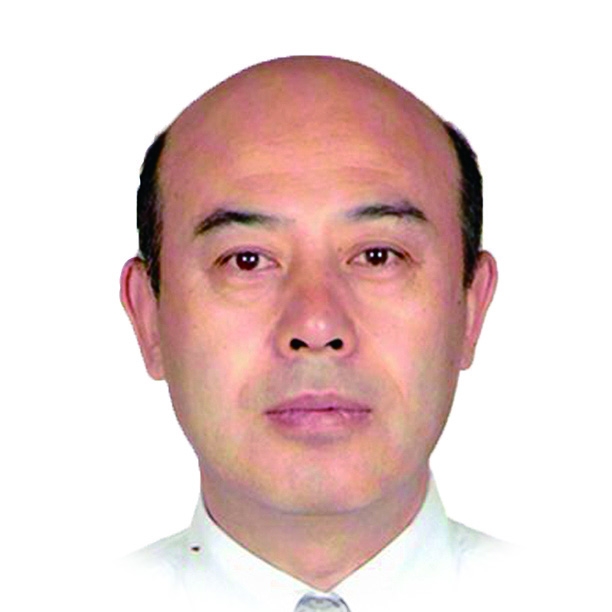
Xu Tao
The G20, originated from the G7, is a quintessential global governance model of the 20th century. Even though it never became a full-fledged institutionalized organization, G20 aims to coordinate economic growth, fend off risks of energy and financial crises, and enable dialogue on sustainability between industrialized and emerging countries.
Its progenitor, the G7, emerged in the 1970s, when the rich world was reeling from the dollar crises and oil crisis. Initially, six advanced nations -- France, the United States, Japan, the United Kingdom, West Germany and Italy -- held informal gatherings to resolve differences in financial and energy policies and weather more severe economic crises to come. Canada later got on board, making it a loose forum.
From its birth to the early policies it adopted, the G7 was an example of Cold War geopolitics. Even after the former USSR collapsed in 1991, the former Soviet states, big or small, were generally treated as aliens and remnants of the USSR. However, confidence buoyed by victory in the Cold War, the G7 magnanimously welcomed Russia to the club as a major industrialized player.
At that time, scholars and think tanks in the West became less interested in possible crises arising from arms races and economic contentions, and more concerned about how to develop an effective system to integrate these economies of various sizes, none of which was ever part of the free market. Therefore, in the advent of the 21st century, finance ministers of the G8 decided to upgrade their forum to G20. This “the more, the merrier” club was to enable dialogue on issues of mutual concerns between developed countries and emerging markets, as well as a tool to maintain global economic stability.
In retrospect, the G20 has certainly contributed to the stability of the world economy, maintaining a just and inclusive world economic order, and promoting a stable environment to support the steady growth of emerging markets and developing countries.
However, many changes have since taken place to reshape the world economy. Major governance bodies and ideas of governance have changed, too. Therefore, G20, as a forum for governance, will have to change as well.
On the one hand, capitalist globalization continues to amass wealth at a dizzy speed and widen the development gap across the globe. On the other, developed nations with their financial prowess and cutting-edge technologies have intentionally pushed the global South to the lower end of the industrial chain. But Western powers are losing their grip. Their capacity to chart the course of the global economy and distribute wealth have been undermined by the decentralization of global strategic resources and the transfer of modern technologies.
As a result, the global governance institution, which took almost two decades to take shape, has been hammered by rising populism and unilateralism.
But the fatal blows are from its founding nations, which laid down the ground rules for a post-Cold War world.
For example, after Donald Trump was elected president, the US has declared to withdraw from Trans-Pacific Partnership Agreement, the Paris Agreement, UNESCO, the Iran nuclear deal and United Nations Human Rights Council. Recently, US government has even threatened to pull out of the Intermediate-Range Nuclear Forces Treaty. The big nations in the West are seemingly calling it quits before anyone else leaves the game.
Some pundits ascribed the situation to declining Western power and insecurity it has triggered. But the growing insecurity of those nations does not stem from their waning financial or manufacturing powers, as both research and data show they are generally in good shape, but from their diminishing control of the rules that they created in global governance. Gone are the days when they could manipulate those rules. Now they have to face up to a brand new global economic landscape of seismic changes.
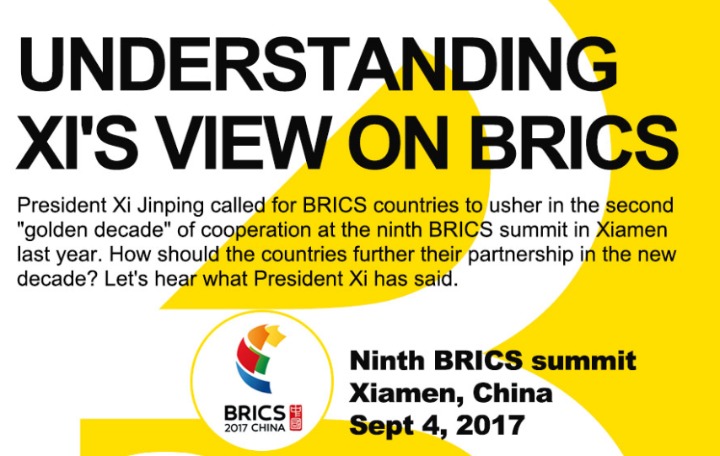
In July, Chinese President Xi Jinping said at the BRICS Business Forum in South Africa, “Our world is undergoing profound changes unseen in a century”. He also said “the next decade will be a crucial one in which new global growth drivers will take the place of old ones”; “the next decade will see faster changes in the international landscape and the international alignment of forces”; and “the next decade will see a profound reshaping of the global governance system”.
Changes in global growth drivers mentioned by President Xi indicate the redistribution of wealth and resource endowment, as well as the transformation in the pattern of international relations. Ultimately, they lead to changes in international political and economic rules.
In this era of changes, the biggest variable is the rise of emerging economies and developing countries like China. They are going to claim higher percentage of global GDP and demand a bigger say in setting the rules. If the late-bloomers become the counterweight to the established, sparks will fly at the annual G20 summit.
Of course, globalization has shown that a zero-sum game would get us nowhere and all nations swim or sink together. Not every Western nation is pursuing beggar-thy-neighbor policies. When Trump is scheming to roll back “Made in China 2025”, German Chancellor Angela Merkel pledges to align Germany's Industry 4.0 with China's manufacturing development plan.
Global forums need vision, wisdom and innovation. In this tempestuous times of great changes, the G20 alone cannot come up with a one-size-fits-all solution for all the problems. But just as political scientist Joseph Nye said, this year’s G20 Summit can provide a platform for big nations to exchange ideas on rebuilding global governance.
Xu Tao is a research fellow of China Institutes of Contemporary International Relations, and director of Eurasian Social Development Institute of Development Research Center of the State Council.
This article was translated by Hou Sheng.
The author contributed this article to China Watch exclusively. The views expressed do not necessarily reflect those of China Watch.
All rights reserved. Copying or sharing of any content for other than personal use is prohibited without prior written permission.
Editor's note: This article is part of the Policy Preview Report for G20 Summit in Argentina.
Xu Tao
The G20, originated from the G7, is a quintessential global governance model of the 20th century. Even though it never became a full-fledged institutionalized organization, G20 aims to coordinate economic growth, fend off risks of energy and financial crises, and enable dialogue on sustainability between industrialized and emerging countries.
Its progenitor, the G7, emerged in the 1970s, when the rich world was reeling from the dollar crises and oil crisis. Initially, six advanced nations -- France, the United States, Japan, the United Kingdom, West Germany and Italy -- held informal gatherings to resolve differences in financial and energy policies and weather more severe economic crises to come. Canada later got on board, making it a loose forum.
From its birth to the early policies it adopted, the G7 was an example of Cold War geopolitics. Even after the former USSR collapsed in 1991, the former Soviet states, big or small, were generally treated as aliens and remnants of the USSR. However, confidence buoyed by victory in the Cold War, the G7 magnanimously welcomed Russia to the club as a major industrialized player.
At that time, scholars and think tanks in the West became less interested in possible crises arising from arms races and economic contentions, and more concerned about how to develop an effective system to integrate these economies of various sizes, none of which was ever part of the free market. Therefore, in the advent of the 21st century, finance ministers of the G8 decided to upgrade their forum to G20. This “the more, the merrier” club was to enable dialogue on issues of mutual concerns between developed countries and emerging markets, as well as a tool to maintain global economic stability.
In retrospect, the G20 has certainly contributed to the stability of the world economy, maintaining a just and inclusive world economic order, and promoting a stable environment to support the steady growth of emerging markets and developing countries.
However, many changes have since taken place to reshape the world economy. Major governance bodies and ideas of governance have changed, too. Therefore, G20, as a forum for governance, will have to change as well.
On the one hand, capitalist globalization continues to amass wealth at a dizzy speed and widen the development gap across the globe. On the other, developed nations with their financial prowess and cutting-edge technologies have intentionally pushed the global South to the lower end of the industrial chain. But Western powers are losing their grip. Their capacity to chart the course of the global economy and distribute wealth have been undermined by the decentralization of global strategic resources and the transfer of modern technologies.
As a result, the global governance institution, which took almost two decades to take shape, has been hammered by rising populism and unilateralism.
But the fatal blows are from its founding nations, which laid down the ground rules for a post-Cold War world.
For example, after Donald Trump was elected president, the US has declared to withdraw from Trans-Pacific Partnership Agreement, the Paris Agreement, UNESCO, the Iran nuclear deal and United Nations Human Rights Council. Recently, US government has even threatened to pull out of the Intermediate-Range Nuclear Forces Treaty. The big nations in the West are seemingly calling it quits before anyone else leaves the game.
Some pundits ascribed the situation to declining Western power and insecurity it has triggered. But the growing insecurity of those nations does not stem from their waning financial or manufacturing powers, as both research and data show they are generally in good shape, but from their diminishing control of the rules that they created in global governance. Gone are the days when they could manipulate those rules. Now they have to face up to a brand new global economic landscape of seismic changes.
In July, Chinese President Xi Jinping said at the BRICS Business Forum in South Africa, “Our world is undergoing profound changes unseen in a century”. He also said “the next decade will be a crucial one in which new global growth drivers will take the place of old ones”; “the next decade will see faster changes in the international landscape and the international alignment of forces”; and “the next decade will see a profound reshaping of the global governance system”.
Changes in global growth drivers mentioned by President Xi indicate the redistribution of wealth and resource endowment, as well as the transformation in the pattern of international relations. Ultimately, they lead to changes in international political and economic rules.
In this era of changes, the biggest variable is the rise of emerging economies and developing countries like China. They are going to claim higher percentage of global GDP and demand a bigger say in setting the rules. If the late-bloomers become the counterweight to the established, sparks will fly at the annual G20 summit.
Of course, globalization has shown that a zero-sum game would get us nowhere and all nations swim or sink together. Not every Western nation is pursuing beggar-thy-neighbor policies. When Trump is scheming to roll back “Made in China 2025”, German Chancellor Angela Merkel pledges to align Germany's Industry 4.0 with China's manufacturing development plan.
Global forums need vision, wisdom and innovation. In this tempestuous times of great changes, the G20 alone cannot come up with a one-size-fits-all solution for all the problems. But just as political scientist Joseph Nye said, this year’s G20 Summit can provide a platform for big nations to exchange ideas on rebuilding global governance.
Xu Tao is a research fellow of China Institutes of Contemporary International Relations, and director of Eurasian Social Development Institute of Development Research Center of the State Council.
This article was translated by Hou Sheng.
The author contributed this article to China Watch exclusively. The views expressed do not necessarily reflect those of China Watch.
All rights reserved. Copying or sharing of any content for other than personal use is prohibited without prior written permission.