The Next 2-3 Years a Window Period for Hainan to Build a Free trade Port with Chinese Characteristics
By Chi Fulin |
chinawatch.cn |
Updated: 2019-05-15 15:06
A year ago (April 13), Chinese President Xi Jinping announced the decision to support Hainan in developing the whole island into a pilot free trade zone, and steadily promoting the establishment of a free trade port. The island province should use the "window period"-the next two to three years-to transition from a pilot free trade zone to a free trade port by expediting free trade in services.
Trade in services has become the spotlight and focus of economic globalization. From 2010 to 2017, volume of trade in services accounted for 21.7 percent of the total, with an average annual growth of 4.5 percent, 2.3 percentage points higher than that of goods trade. Service trade has also become a priority of China’s further opening-up. From 2010 to 2018, the average annual growth rate of China’s service trade was two times that of goods trade. Furthermore, trade in services has become the fundamental direction of the transformation of international free trade ports. For example, proportion of service trade in total trade volume in Singapore increased to 32.4 percent in 2017 from 19.2 percent in 2005.
Hainan is well positioned to use innovative means to boost service trade. Last year, the province's trade in services accounted for 18.1 percent of its total trade volume, 3.4 percentage points higher than the national average. The Hainan free trade port should build up its unique advantages in service trade, and prioritize the dimension and depth of the opening-up of its services market.
Accelerating free trade in services is a practical measure for Hainan to achieve innovative development in service trade. President Xi Jinping has said that developing the modern service industry is in line with the industrial development of the times and suits Hainan's actual development conditions. Therefore, Hainan should play an exemplary role in this respect, Xi said. That means Hainan should expedite the process of free trade in modern services such as tourism, healthcare, the internet, finance and exhibitions to boost the free, efficient flow of people, capital, information, technology and goods, which will help the province to not only speed up the formation of a service-dominated industrial structure but also a free port development model that focuses on innovation in service trade.
Hainan has the conditions to achieve major breakthroughs in free trade in services.
The island province should join hands with the Hong Kong Special Administrative Region to build an international tourism consumption center with global influence. To resolve the problem of insufficient supply of international products and services, Hainan should introduce the industry chains and supply chains of Hong Kong’s tourism consumption, and promote the integration of tourism-related shopping management and market supervision standards between the two regions. This will help transform and upgrade the services related to culture, entertainment, finance, insurance and logistics.
As a demonstration project to explore international medical tourism, Hainan’s Boao Lecheng International Medical Tourism Pilot Zone has been granted special preferential policies. Hainan should expand some of the policies to the entire island and further explore the depth of such policies. Against the backdrop of surging demand for healthcare services in Hainan and China expediting the opening-up of medical and healthcare sector, the medical and healthcare industry should be Hainan’s trump card for further development and the key lies in seizing development opportunities. Following the establishment of Boao Lecheng as an international high-end medical cooperation center, free flow of capital, people and technologies in the medical and healthcare industry should be realized within the entire island to build the province into a national medical tourism hub for the benefits of tourists and local residents.
The tropical island province should hasten the opening-up of its education market. Laggard development of education has severely restricted Hainan’s social and economic development. Private and foreign capital should be allowed to invest in the education sector. Qualified Chinese and foreign research and development institutions, educational institutions and high-level enterprises should be allowed to set up vocational colleges featuring medical treatment and healthcare, tourism and culture majors, so as to cultivate mid-to-high end skill-oriented and service-oriented talent for the free trade port.
A free trade port represents the highest level of opening-up. When developing a service trade-dominated free trade port, Hainan should implement the most open market access policies and the highest-level trade and investment liberalization and facilitation policies. Hainan should implement the most open service sector access policy, formulate its own version of negative list for service trade, abolish the restrictive investment measures in the existing negative list except those for publications, radio and television and other special areas, and give equal pre- and post-establishment treatment to domestic and foreign entities, in order to fully open up its services market and facilitate innovative development in service trade.
To fully open up its services market, Hainan should also implement tax policies similar to those adopted by Hong Kong, Singapore and other internationally renowned free trade ports. For example, the corporate income tax rate should be reduced to 15 percent in modern service sector. The province should impose zero tariffs on healthcare, tourism, cultural and entertainment products, and levy zero value-added tax on transactions between modern service enterprises in the province.
The island province needs to implement policies to liberalize and facilitate service trade. For instance, in order to promote free flow of people, Hainan should, on the premise of strictly controlling risks, further relax visa rules for foreigners working on the island, lower the residence certificate application threshold, scrap employment restrictions on foreigners who have work visa, fully apply international standards on service sector management, among others.
The province should be granted more autonomy to accelerate free trade in services, such as setting up a special customs supervision zone. The Hainan free trade port, designed to serve not only the domestic market but also the global market, should be equipped with a whole new set of customs supervision and administration system to guarantee the implementation of its open policies and at the same time fend off risks. Furthermore, to accelerate the construction of an international tourism consumption center in Hainan, the island province should be granted more autonomy in taxation to build an internationally competitive taxation and fiscal system that features “simple tax system, low tax rate and zero tariffs”.
No great breakthroughs will be made in reform without great mind emancipation, according to Xi. The next two to three years are a crucial phase for Hainan to transition from a free trade zone to a free trade port. With the goal of establishing a free trade port with Chinese characteristics, Hainan should learn advanced operation methods and management skills from other international free trade ports, boldly adopt any reform and opening-up measures that help achieve the fixed goals, and strive to stand at the forefront of reform and opening-up to exert great influence on forging a new pattern of opening-up in China.
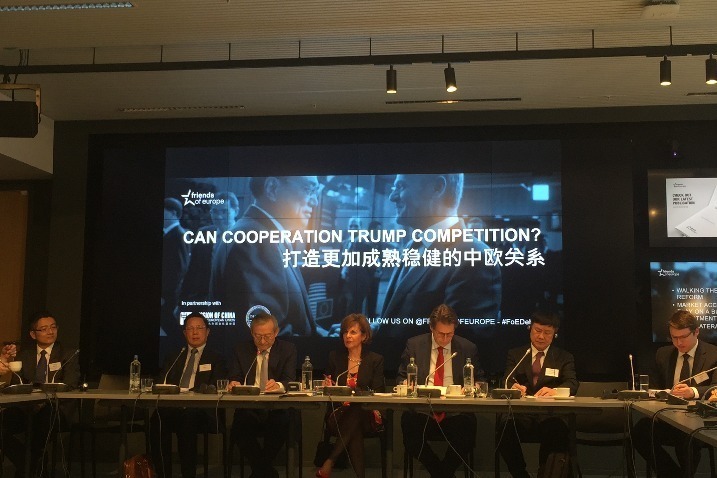
The author is the president of China Institute for Reform and Development. The article is an edited version from his speech at the opening ceremony of 2019 Sino-Norwegian Social Policy Forum.
A year ago (April 13), Chinese President Xi Jinping announced the decision to support Hainan in developing the whole island into a pilot free trade zone, and steadily promoting the establishment of a free trade port. The island province should use the "window period"-the next two to three years-to transition from a pilot free trade zone to a free trade port by expediting free trade in services.
Trade in services has become the spotlight and focus of economic globalization. From 2010 to 2017, volume of trade in services accounted for 21.7 percent of the total, with an average annual growth of 4.5 percent, 2.3 percentage points higher than that of goods trade. Service trade has also become a priority of China’s further opening-up. From 2010 to 2018, the average annual growth rate of China’s service trade was two times that of goods trade. Furthermore, trade in services has become the fundamental direction of the transformation of international free trade ports. For example, proportion of service trade in total trade volume in Singapore increased to 32.4 percent in 2017 from 19.2 percent in 2005.
Hainan is well positioned to use innovative means to boost service trade. Last year, the province's trade in services accounted for 18.1 percent of its total trade volume, 3.4 percentage points higher than the national average. The Hainan free trade port should build up its unique advantages in service trade, and prioritize the dimension and depth of the opening-up of its services market.
Accelerating free trade in services is a practical measure for Hainan to achieve innovative development in service trade. President Xi Jinping has said that developing the modern service industry is in line with the industrial development of the times and suits Hainan's actual development conditions. Therefore, Hainan should play an exemplary role in this respect, Xi said. That means Hainan should expedite the process of free trade in modern services such as tourism, healthcare, the internet, finance and exhibitions to boost the free, efficient flow of people, capital, information, technology and goods, which will help the province to not only speed up the formation of a service-dominated industrial structure but also a free port development model that focuses on innovation in service trade.
Hainan has the conditions to achieve major breakthroughs in free trade in services.
The island province should join hands with the Hong Kong Special Administrative Region to build an international tourism consumption center with global influence. To resolve the problem of insufficient supply of international products and services, Hainan should introduce the industry chains and supply chains of Hong Kong’s tourism consumption, and promote the integration of tourism-related shopping management and market supervision standards between the two regions. This will help transform and upgrade the services related to culture, entertainment, finance, insurance and logistics.
As a demonstration project to explore international medical tourism, Hainan’s Boao Lecheng International Medical Tourism Pilot Zone has been granted special preferential policies. Hainan should expand some of the policies to the entire island and further explore the depth of such policies. Against the backdrop of surging demand for healthcare services in Hainan and China expediting the opening-up of medical and healthcare sector, the medical and healthcare industry should be Hainan’s trump card for further development and the key lies in seizing development opportunities. Following the establishment of Boao Lecheng as an international high-end medical cooperation center, free flow of capital, people and technologies in the medical and healthcare industry should be realized within the entire island to build the province into a national medical tourism hub for the benefits of tourists and local residents.
The tropical island province should hasten the opening-up of its education market. Laggard development of education has severely restricted Hainan’s social and economic development. Private and foreign capital should be allowed to invest in the education sector. Qualified Chinese and foreign research and development institutions, educational institutions and high-level enterprises should be allowed to set up vocational colleges featuring medical treatment and healthcare, tourism and culture majors, so as to cultivate mid-to-high end skill-oriented and service-oriented talent for the free trade port.
A free trade port represents the highest level of opening-up. When developing a service trade-dominated free trade port, Hainan should implement the most open market access policies and the highest-level trade and investment liberalization and facilitation policies. Hainan should implement the most open service sector access policy, formulate its own version of negative list for service trade, abolish the restrictive investment measures in the existing negative list except those for publications, radio and television and other special areas, and give equal pre- and post-establishment treatment to domestic and foreign entities, in order to fully open up its services market and facilitate innovative development in service trade.
To fully open up its services market, Hainan should also implement tax policies similar to those adopted by Hong Kong, Singapore and other internationally renowned free trade ports. For example, the corporate income tax rate should be reduced to 15 percent in modern service sector. The province should impose zero tariffs on healthcare, tourism, cultural and entertainment products, and levy zero value-added tax on transactions between modern service enterprises in the province.
The island province needs to implement policies to liberalize and facilitate service trade. For instance, in order to promote free flow of people, Hainan should, on the premise of strictly controlling risks, further relax visa rules for foreigners working on the island, lower the residence certificate application threshold, scrap employment restrictions on foreigners who have work visa, fully apply international standards on service sector management, among others.
The province should be granted more autonomy to accelerate free trade in services, such as setting up a special customs supervision zone. The Hainan free trade port, designed to serve not only the domestic market but also the global market, should be equipped with a whole new set of customs supervision and administration system to guarantee the implementation of its open policies and at the same time fend off risks. Furthermore, to accelerate the construction of an international tourism consumption center in Hainan, the island province should be granted more autonomy in taxation to build an internationally competitive taxation and fiscal system that features “simple tax system, low tax rate and zero tariffs”.
No great breakthroughs will be made in reform without great mind emancipation, according to Xi. The next two to three years are a crucial phase for Hainan to transition from a free trade zone to a free trade port. With the goal of establishing a free trade port with Chinese characteristics, Hainan should learn advanced operation methods and management skills from other international free trade ports, boldly adopt any reform and opening-up measures that help achieve the fixed goals, and strive to stand at the forefront of reform and opening-up to exert great influence on forging a new pattern of opening-up in China.
The author is the president of China Institute for Reform and Development. The article is an edited version from his speech at the opening ceremony of 2019 Sino-Norwegian Social Policy Forum.